


 Login
Login
 Tiếng Việt
 日本語
日本語Decision No. 2229/QĐ-TTg (dated October 9, 2025) has moved beyond macro-level directions. It has set an “urgent assignment” for e-commerce logistics.
There are three core requirements:
-
Infrastructure: Form classification hubs and specialized warehouses. The goal is “fast processing of large volumes”.
-
Services: Prioritize logistics services serving exports and Cross-Border E-Commerce.
-
Legal: Perfect the infrastructure and business environment to facilitate these cargo flows.
So, what is the solution to the problem of “processing large volumes” at optimal costs? The answer was enthusiastically discussed at Panel 2 of the FWC 2025 Conference.
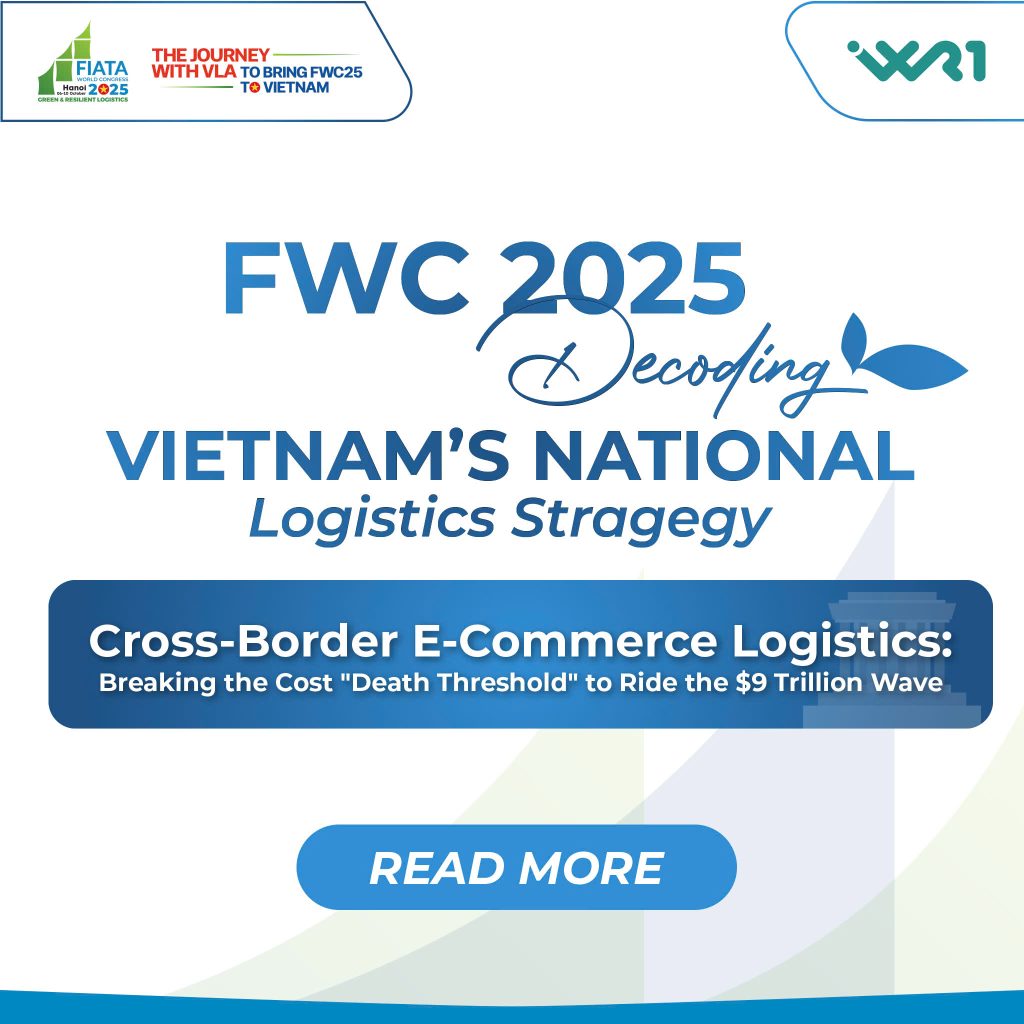
The Big Picture: The “Gold Mine” and “Death Threshold”
The Heat from the Market: The Cross-Border E-Commerce (CBEC) market is becoming a dominant trend with a forecast scale reaching up to $9 trillion. Not stopping at conference discussions, Vietnam rapidly took a strategic step when the Vietnam E-commerce and Digital Economy Agency (iDEA – Ministry of Industry and Trade) officially signed a cooperation agreement with Shopee on November 25, 20257. Taking place immediately after the conference, this event affirms the Government’s determination to realize the proposed solutions and bring Vietnamese goods to the world.
However, this picture comes with a warning about the “Death Threshold”:
Despite the potential, Mr. Steve Wang – CEO of FAR International Holdings Group (representing the seller’s perspective), presented an alarming figure at FWC 2025: Logistics costs currently account for an average of 30% of the product price9. If this figure hits 50%, approximately 1/3 of small and medium-sized enterprises (SMEs) will go bankrupt and be forced to leave the market.
This poses a vital question: How to capitalize on the trillion-dollar opportunity without being “swallowed” by operating costs?
Core Differences in the Supply Chain
Why do operating costs become such a heavy burden? We need to look straight at the difference in cargo flows between Traditional Logistics and Cross-Border E-Commerce.
| Feature | Traditional Logistics (Sea & Air) | CBEC Logistics (Cross-Border) |
| Nature of Goods | Large Batches: Containers (FCL/LCL) or pallets/ULDs. | Small Parcels: Millions of small packets from thousands of sellers. |
| Operating Model | Port-to-Port: Concentrated at Seaports, Airports, or CFS warehouses. | Door-to-Door: Concentrated at Sorting Centers and Last Mile delivery. |
| Optimization Goal | Cost (Sea) or Time (Air) for large flows. | End-Customer Experience and flexible Data processing. |
| Biggest Challenge | Port congestion, lack of space, complex B/L. | Customs for mass small parcels, managing Reverse Logistics. |
Insight: Logistics is no longer simply about moving “mass physical flows.” With CBEC, it is a battle of data processing and optimizing individual small orders.
Key Challenges: Bottlenecks to Remove
Based on discussions from Panel 2 experts, three major challenges are holding back the industry:
-
Operational Costs and Reverse Logistics: This is a “nightmare” with return rates reaching 20-30%. The current reverse process is costly and complex. It often “erodes” all of the seller’s profits.
-
Legal Fragmentation: Each country has different regulations regarding de minimis thresholds. The lack of standardization causes goods to easily get stuck at borders.
-
Fragmented Infrastructure: Logistics companies are building individual infrastructure. This leads to wasted resources and a lack of synchronized connectivity.
The “Three-Legged Stool” Solution
How do we solve the “large volume” problem at low costs? The goal is reducing logistics costs to 12-15% of GDP (per Decision 2229).
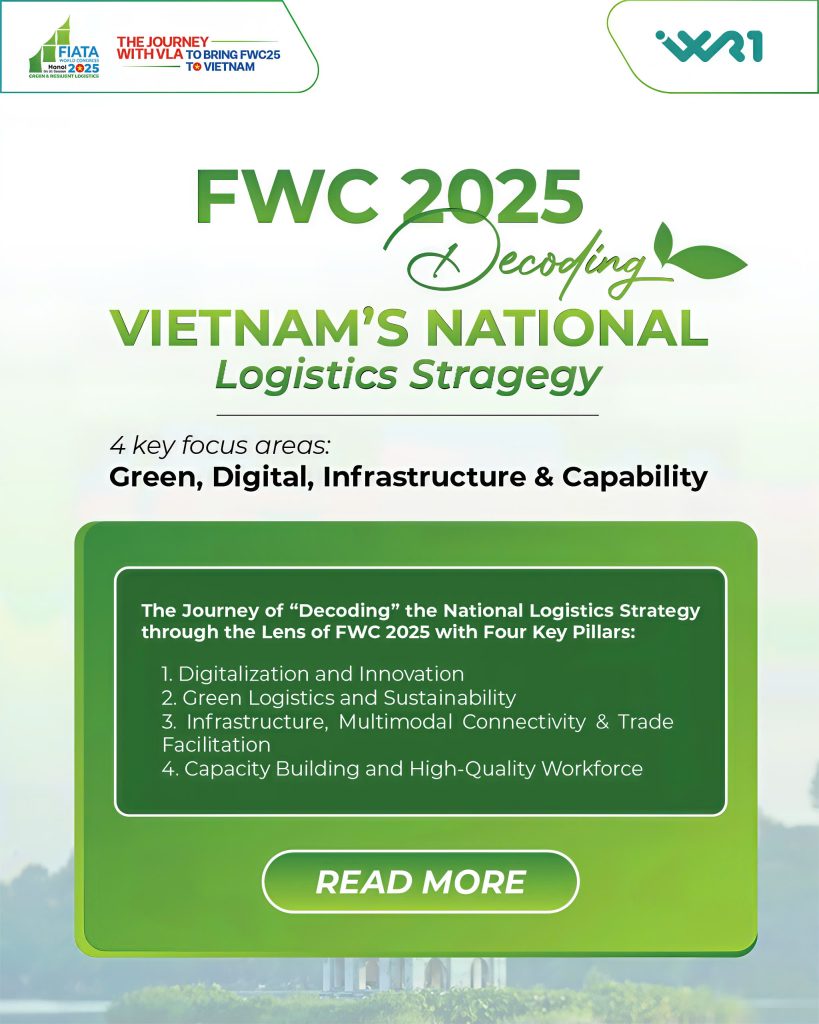
Speakers at FWC 2025 proposed a “Three-Legged Stool” solution model. This model directly addresses the Government’s core pillars.
Pillar 1: Hybrid Infrastructure (Infrastructure & Green)
We must abandon the “go it alone” mindset. Mr. Tracy Hackshaw (UPU) emphasized avoiding wasted resources on building completely new infrastructure.
-
Solution: Private logistics enterprises need to combine with UPU’s global postal network (650,000 post offices). They should also partner with airlines like Ethiopian Airlines to utilize specialized transit Hubs.
-
Impact: This approach ensures synchronized infrastructure. It also promotes green logistics by optimizing transport and avoiding empty runs.
Pillar 2: Tech & Data (Digital Problem)
Mr. Nachi Mendelow (WiseTech Global) and Mr. Craig Strickland (BoxC) affirmed: Technology must solve fragmentation.
-
Solution: Build a “Visual Brain” using AI and Big Data. This system forecasts cargo flows and automates tax calculation. It handles HS code classification and compliance with complex regulations.
-
Impact: This meets the goal of “80% of enterprises using digital transformation.” It helps build the smart customs model outlined in the national strategy.
Pillar 3: Policy & Partnership (Capacity Problem)
No single enterprise can overcome Cross-Border E-Commerce barriers alone.
-
Solution: Ms. Lai Viet Anh (iDEA) emphasized the Government’s role in perfecting the legal framework. Businesses need to proactively cooperate. The goal is to form e-commerce “Green Lanes” based on transparent data sharing.
-
Impact: This cooperation enhances the competitiveness of Vietnamese enterprises. They will be strong enough to participate deeply in the global supply chain.
WR1 Perspective: “Collaborative Sharing” Mindset
WR1 has analyzed the insights from FWC 2025 and Decision 2229. The key to handling “large volumes” is specialized division of labor. This must happen between the Wholesaler group and the Retail Forwarder group.
As a neutral Wholesale operator, we share suggestions for small logistics enterprises:
-
Leverage Shared Infrastructure: Do not carry the risk of investing in warehousing to chase scale. Treat the Wholesaler’s infrastructure as your “back-office.” Concentrate resources on finding and caring for customers.
-
Technology as a Service: Building an in-house digital system is expensive. The optimal solution is API integration with Wholesalers. You immediately gain international standard clearance capabilities without large initial costs.
-
Borderless Market Expansion: You do not need offices abroad. Use the Wholesaler’s network as an “extended arm.” Direct routes to niche markets (Africa, Latin America) help Forwarders confidently offer global “door-to-door” services.
Conclusion
Decision 2229 is a “common assignment” for the entire industry. WR1 believes the future of logistics will shift towards tight integration. Wholesalers create infrastructure and platform technology. Retailers focus on understanding the market and serving customers. This resonance will help Vietnamese enterprises optimize costs. It is the key to succeeding in Cross-Border E-Commerce and enhancing national competitiveness.
Read more:
Next-Generation Corridors: When “Soft Infrastructure” Leads “Hard Infrastructure
References
-
Industry and Trade Magazine. (2025, November 7). Vietnam E-commerce and Digital Economy Agency (Ministry of Industry and Trade) partners with Shopee to bring Vietnamese goods to the international market. https://tapchicongthuong.vn/cuc-thuong-mai-dien-tu-va-kinh-te-so–bo-cong-thuong–hop-tac-cung-shopee-dua-hang-viet-vuon-ra-thi-truong-quoc-te-328853.htm
-
Prime Minister. (2025). Decision No. 2229/QD-TTg approving the Strategy for Development of Vietnam’s Logistics Services for the period 2025–2035, with a vision to 2050. Law Library. https://thuvienphapluat.vn/van-ban/Thuong-mai/Quyet-dinh-2229-QD-TTg-2025-Chien-luoc-phat-trien-dich-vu-logistics-Viet-Nam-2025-2035-676167.aspx
-
Synthesized by the author from discussion sessions at the FWC 2025 Conference.

 Tiếng Việt
 English