


 Login
Login
 Tiếng Việt
 日本語
日本語Decision No. 2229/QD-TTg dated 9 October 2025, issued by the Prime Minister, has set a clear “assignment” for Vietnam’s logistics sector: by 2035, logistics should contribute 5–7% to GDP, achieve a growth rate of 12–15%, and, most importantly, position Vietnam among the world’s top 40 countries in the Logistics Performance Index (LPI).
However, focusing solely on concrete infrastructure may misread the core challenge of this era. From FWC 2025 Panel 6, global experts introduced a new definition of next-generation economic and transport corridors. Soft infrastructure, including policy alignment, technology standardization, and digitalization, was identified as the operating system of national logistics performance and a critical factor for global supply chain integration.
Redefining Corridors: From Transport Routes to Economic Ecosystems
Traditional thinking equates economic corridors with highways and deep-sea ports as hard infrastructure. Vietnam has performed well in this area over the past decade. In Da Nang, Vice Chairman Tran Chi Cuong highlighted the city’s strategic position with integrated seaports, an international airport, and over 13,500 kilometers of roads. Da Nang is positioning itself as a new regional connectivity hub.
However, in the new era, hard infrastructure is only a necessary condition. At FWC 2025, FIATA President Turgut Erkeskin stated that a corridor is not just transport, but an economic ecosystem and an interaction network between economies. Next-generation corridors cooperate rather than compete to enhance global supply chain efficiency.
This mindset shift strongly aligns with Vietnam’s national vision. Speaking at the 8th GMS Summit, Prime Minister Pham Minh Chinh emphasized moving beyond traditional corridors toward next-generation economic corridors driven by technology, innovation, and multi-stakeholder connectivity. The convergence between government leadership and global expertise signals that Vietnam is on the right path.
Decoding International Models
To realize this vision, lessons from global case studies discussed at FWC 2025 offer valuable insights into what distinguishes next-generation corridors:
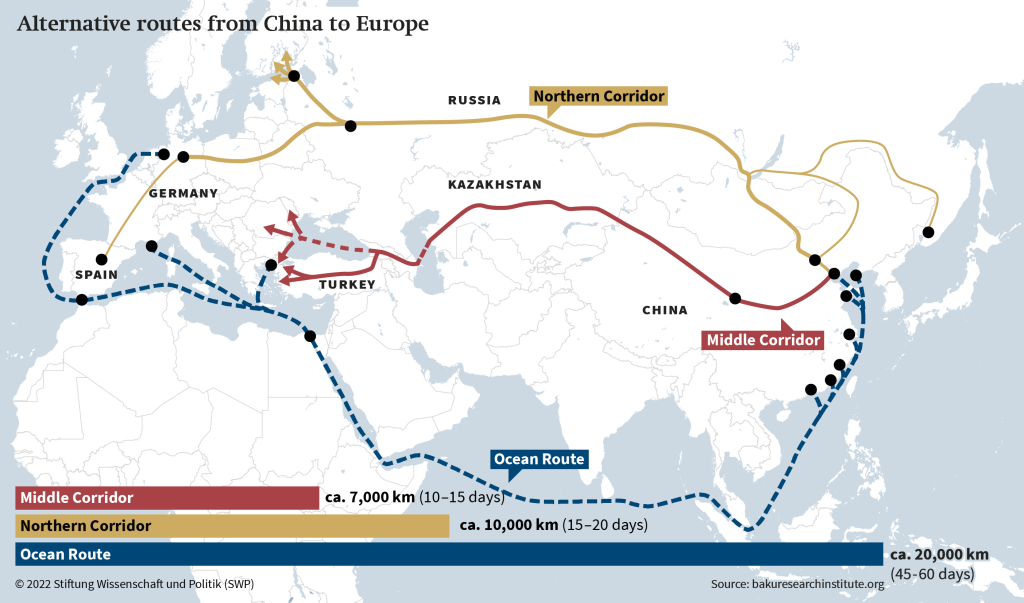
- Middle Corridor: Cited by Mr. Turgut Erkeskin as a viable alternative route linking China and Europe, the Middle Corridor demonstrates that a modern corridor is not merely about rail infrastructure (even if it shortens distances compared to northern routes), but about overcoming legal and regulatory diversity across multiple countries.

- TEN-T: Mr. Francesco Parisi, former FIATA President, shared Europe’s hard-earned lesson: soft infrastructure — laws, procedures, and technology — must precede hard infrastructure. Without unified processes, even the most modern roads will be congested by administrative bottlenecks.

- KTI Corridor: Mr. Fedor Kormilitsyn (ESCAP) highlighted this corridor to emphasize the importance of cross-border legal harmonization and technical standards. Its success stems not only from rail connectivity, but from multilateral frameworks such as the Trans-Asian Railway (TAR).
The Four Pillars of Soft Infrastructure – A Golden Key for Vietnam
Drawing from these case studies, Mr. Turgut Erkeskin summarized four critical conditions for effective next-generation corridors:
- Policy Alignment
Mr. Fedor Kormilitsyn noted that legal disparities remain the greatest challenge. Mr. Nguyen Ba Hung (National Economic Expert, Asian Development Bank) added that while infrastructure is a necessary condition, finance and policy instruments (such as PPPs and Free Trade Zones) are the sufficient conditions. A sustainable corridor requires harmonized policies to unlock trade flows. - Technological Standardization
Ms. Zhanar Bagasharova (Business Development Director, DTC Global) emphasized tools such as eFBL (electronic negotiable bills of lading). Replacing paper with standardized data accelerates trade finance, reduces fraud, and creates a common language across the supply chain. - Integrated Multimodal Transport
Beyond physical connectivity, Mr. Fedor highlighted the role of dry ports as integrated logistics hubs. Seamless transitions between road, rail, and sea are critical to operational efficiency. - System-wide Digitalization
This is the backbone of next-generation corridors. Ms. Zhanar illustrated this through the Global Digital Trade Corridor (DTC), where transit customs clearance takes only 30 minutes thanks to automated processes and track-and-trace systems. Digitalization enables 24/7 collaboration, removing barriers of time and geography.
Lessons for Da Nang and the National Strategy
Decision 2229 sets the goal of developing at least five internationally competitive logistics centers by 2035. When viewed through the lens of Da Nang — one of Vietnam’s strategic growth poles — both opportunities and challenges become clear.
Da Nang already possesses impressive hard infrastructure and has outlined a Free Trade Zone (FTZ) covering 1,881 hectares. However, Mr. Tran Chi Cuong candidly acknowledged existing gaps: “We have strategies, but do we have detailed plans? Are current infrastructure capacities truly feasible?” In particular, attracting high-quality human resources remains misaligned with the city’s living ecosystem.
Vietnam should therefore avoid the mistake of “building the shell while neglecting the core.” As advised by Mr. Francesco Parisi, priority should be given to developing soft infrastructure — regulations, procedures, and technology — even before completing hard infrastructure. In line with the Prime Minister’s vision at the GMS Summit, Da Nang should become a corridor of technology and innovation, where digital platforms, automated customs processes, and high-quality human capital move one step ahead to attract investment flows.
Only by combining the strength of “concrete” (physical infrastructure) with the agility of a “digital operating system” (soft infrastructure) can Vietnam truly seize a new trajectory and elevate its national logistics sector to global standards, as envisioned in Decision 2229.
Conclusion
From Decision 2229/QD-TTg to the dynamic discussions at FWC 2025, a consistent message emerges: the future of Vietnam’s logistics sector does not lie solely in growth figures or the scale of physical infrastructure. The real key to entering the Top 40 LPI worldwide is soft infrastructure — where policy, technology, and people converge to operate the logistics engine at its highest efficiency.
From the insights of Panel 6 on “next-generation economic corridors,” WR1 clearly recognizes that the industry stands at the threshold of a profound mindset shift: from “building” to “orchestrating,” from “geographical connectivity” to “digital connectivity.”
As an active participant in the industry, WR1 shares these analytical perspectives with the aim of systematizing strategic information flows and providing the logistics community with additional reference points to define their own paths forward. We hope that these insights into the synergy between “concrete” and “digital intelligence” will offer valuable takeaways for our partners and readers, contributing — even modestly — to the new era of Vietnam’s logistics advancement.

 Tiếng Việt
 English